Robert Altman and 3 Women
In April 1976, when I was forty years old, I was in the tempestuous and exhilarating stages of becoming a composer. Still, I was anxiously riddled about what to do next.
At the time, I was living with my boyfriend, Rafe Blasi, in a loft on Seventh Avenue and West 27th Street, just opposite the Fashion Institute of Technology. A giant metal trash container, used to collect debris from a building being demolished, stood at the curb just outside our front door. It was filled with arms, legs, and torsos from dismembered manikins and epitomized an only-in-New-York scene. People walking by would reach into the pile of plastic limbs, pull out an arm or a leg, look it over, then toss it back into the container with a look of disdain.
Rafe and I considered assembling a pile of arms and legs near the large windows at the front of our loft as an homage to the fashion industry. He worked as a unit publicist for movies that were about to open, writing press releases and arranging screenings for critics. He knew other public relations people in the movie industry, including Robert Altman’s full-time publicist, Mike Kaplan.
….
In the late 1970s, Altman was writing, directing, and producing one or two films a year and selling them to 20th Century Fox for distribution. Alan Ladd, Jr., was Altman’s primary supporter at Fox, and he got a green light for 3 Women, a film based on a dream, which would be shot without a script in the desert near Palm Springs. It was a totally improvised movie, and it represented Altman at his most daring, willing to risk his money and reputation on a bizarre idea.
…
Rafe sent Altman a cassette containing a suite for solo flute I had just written called “Noumena.” The performer was Michael Parloff, a brilliant young flutist just out of Juilliard, whom I met in a restaurant called Ruskay’s, where I cooked Sunday nights. Michael was hired to serenade the diners and play virtually every solo flute piece in existence. Over steaming carrots, I absorbed his beautiful flute sounds as I plated my filet of sole Helen Corbitt, a dish I created to pay tribute to the first chef I ever idolized. In the early 1950s, the original Neiman Marcus in Dallas hired Corbitt to create a restaurant called the Zodiac Room. There, at the age of fifteen, I discovered the thrill of eating imaginatively conceived and skillfully prepared food. And now, as a cook at Ruskay’s, I was connecting with a virtuoso flute player who was to become the star of my first film score and the principal flutist with the Metropolitan Opera Orchestra.
….
“Noumena” impressed Altman enough to consider me, along with two other composers, for 3 Women. But it wasn’t Altman alone who made the final decision. It was his staff of office workers and editors, as well as friends and actors he’d worked with, such as Elliott Gould, Lily Tomlin, and Peter Boyle. Late on a Friday afternoon, they gathered in Altman’s office for drinks and a little grass. When everyone was sufficiently drunk and stoned, Altman asked for quiet, saying, “I want you to listen to some music.” The room fell silent. Everyone knew this was about 3 Women. He signaled the audio engineer to begin playing the three tapes in succession. As each cassette began, Altman used a stopwatch to determine exactly how much time elapsed before anyone started talking again, the point at which they had stopped listening. The piece with the longest period of silence won. It was mine.
….
Altman called to give me the good news while I was peeling carrots in Ruskay’s prep kitchen. He asked me to meet him in Sam Cohen’s office at International Creative Management. I arrived carrying a bright yellow plastic briefcase I had bought in Toronto when I was a traveling salesman. Altman greeted me warmly and said, “Have you ever composed music for film?” I answered, “No.” “Have you ever orchestrated or conducted an orchestra?” I shook my head no. “Well, can you?” he asked point black. “Yes,” I said without hesitation. “Okay,” Altman grinned, “the job’s yours.”
….
He found me in his Zen-like way, and I made a deal with him when he told me the job was mine. I wanted Parloff, who played my music beautifully, to be the flute soloist in the orchestra assembled to record my score.
….
Flying out to L.A. to begin work on 3 Women, I was terribly excited. Mike Kaplan, Altman’s publicist, met me at the airport and drove me to a small apartment-like hotel on Sunset Boulevard near Westwood. My rooms there had a view, through French windows with flowing white curtains, of the Mormon Temple at the end of a corridor of palm trees. It was enchanting, but somehow not the place for me to work on the score for 3 Women. I told Altman, and he told me to find a place I liked.
…
I found a small apartment near the U.C.L.A. campus in Westwood, not far from Altman’s studio. I went to the Yamaha piano dealer and rented a baby grand that had been used in the bi-centennial celebration in the Rose Bowl. It was painted red, white, and blue, inside and out. Yamaha offered to sell it to me at a bargain price, but I declined. It might have been fun to have as a souvenir, but I didn’t want to deal with shipping it back to New York.
….
As I was writing the score in December 1976, Altman told me how he’d gone about finding original music for 3 Women: “I wanted something abstract, something none of my staff had ever heard before, and something they’d never on their own choose to listen to.” He allowed me, with no directions, to create any sounds I wished to accompany his images. I never felt so empowered in my life. His trusting me with no conditions or stipulations taught me to trust myself the same way. That method of working, I think, was the purest form of his genius. It epitomized inspiration.
…
In the recording sessions, Michael Parloff was indeed the flute soloist. But John Williams, who composed the music for Altman’s film The Long Goodbye, chose every other instrumentalist in the ensemble, virtuoso studio musicians who could readily read modern music. I was especially nervous about facing those ace musicians as I took the podium, and I told them, right off the bat, that I’d never conducted before. But I added that my score was really chamber music—for nineteen instruments—and I hoped they’d follow Michael’s example and just conduct themselves. At first, they looked dismayed, but then, as the session progressed, they took charge and corrected themselves and repeated takes they didn’t like. I was immensely relieved and flattered that my music had won their respect.
….
It was Michael’s flute playing that really convinced them, and during the lunch break they paid him the ultimate compliment of camaraderie by exchanging stories and quips about how different things used to be for professional musicians. Two of them had studied with musicians who played in the NBC Symphony conducted by Arturo Toscanini.
….
The finished recording of my music for 3 Women thrilled me. I had trouble grasping the fact that my first film score had been recorded by the best studio musicians in Hollywood and that it was the soundtrack for a Robert Altman film. I kept thinking of my brother Marion, 16 years older than I, who had been a high school band director in Texas and was my first mentor and guide in music. How I wished he were alive and could hear my score for 3 Women. It had passages that sounded like all the musicians he introduced me to in the early 1950s—Stan Kenton, the Four Freshmen, and June Christy. I felt certain he would love it.
*****
This is from the book Getting Saved: Coming Out as a Gay Man and a Composer [memoir] by Gerald Busby (Finishing Line Press), and can be found at https://finishinglinepress.com/product/getting-saved-coming-out-as-a-gay-man-and-a-composer-memoir-by-gerald-busby/
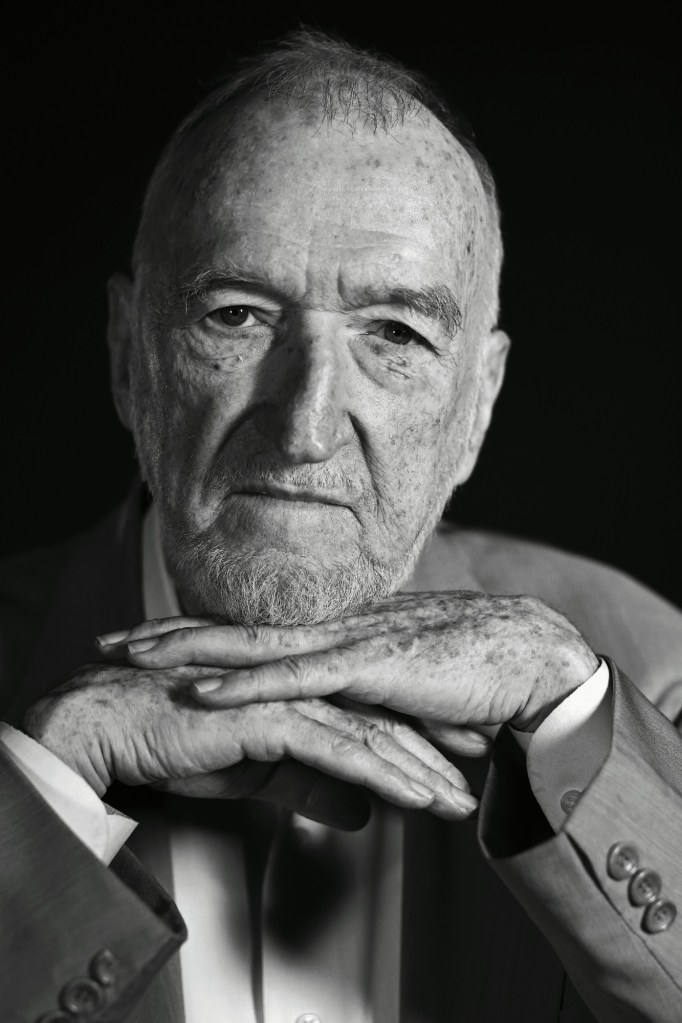
Headshot by Ivan Cordoba
…..
Gerald Busby was born in Texas in 1935. A piano prodigy who grew up in a Southern Baptist family, he performed with the Houston Symphony when he was 15 and attended the Yale School of Music, graduating in 1960, two years after coming out as a gay man. His best known compositions are Runes, commissioned for a ballet by Paul Taylor, and the score for Robert Altman’s film 3 Women. He moved into the Chelsea Hotel with Sam Byers, the love of his life, in 1977. After Sam died of AIDS, Gerald fell apart, gradually recovering and resuming his vocation as a composer. He continues to live in the Chelsea Hotel.

