He told us he had served
in the artillery, a forward spotter,
which I choose to imagine, knowing better now.
I see him, a passenger in the cramped cockpit
of a metal and fabric airplane circling
above splintered trees and shell craters,
a refugee Jew returned, loving his work,
dancing in the shock waves
wheeling like a hawk in the wind,
wary of fighters and ground fire
in his flimsy Stinson.
Microphone by his lips, intimate as a kiss,
he calls in the coordinates
for the Howitzers with the voice
of a god of storms.
Then he watches his bright flowers bloom
in geysers of dirt and flesh and flame–
his own death garden blossoming.
And though I know now
that he hid the truth
according to his promise,
sometimes I still look up, imagining
an olive drab, cruciform angel
circling surely overhead,
and I strain to hear the faint chug
of an engine driving slant wings
in a watchful orbit
above me, a man freed of time,
his vision grown absolute,
speaking in our purest language,
calling in enemy positions,
setting targets, truing my aim
with his vision’s high span.
I imagine him, young, whole and trim,
grim, hard-grained as hickory,
his sure eyes slit against the sun,
sending me intelligence,
the disposition of the enemy,
the view from above.
…..
This poem is from the book Dreaming Fathers by David Kann (Finishing Line Press), and can be found at https://www.finishinglinepress.com/product/dreaming-fathers-by-david-kann/
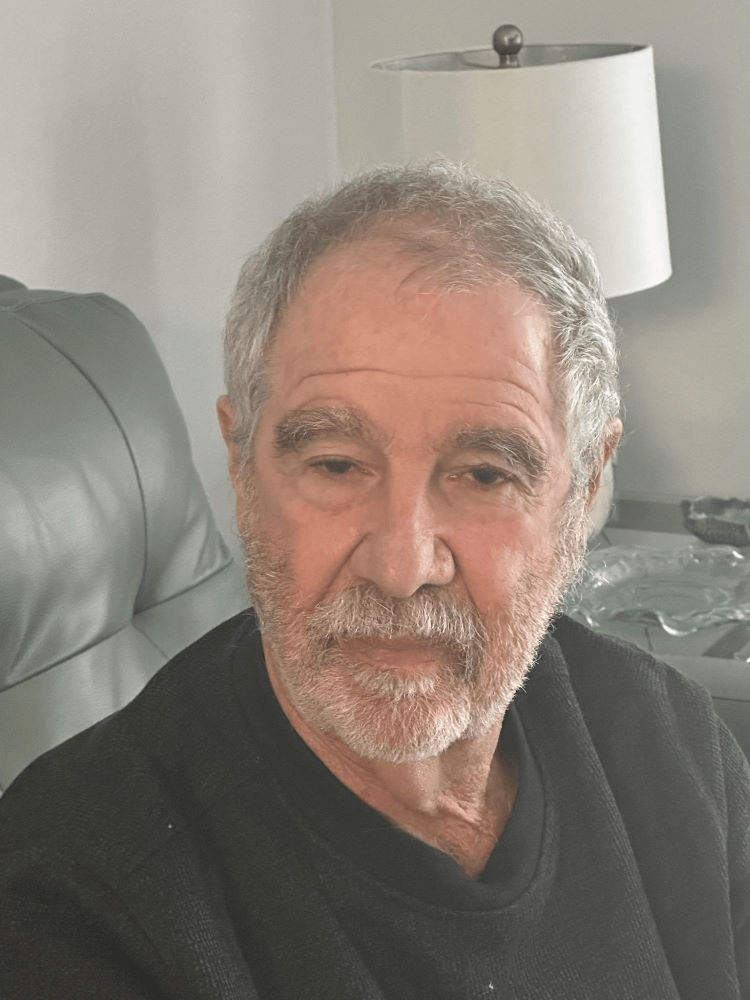
David Kann is a newly retired professor emeritus, having spent more years than he cares to admit to teaching literature at Cal Poly, San Luis Obispo. He has had poetry published in such journals as Lunch Ticket, Forge, Fourth River and Red Coyote. His chapbook, The Language of the Farm, won the Five Oaks Press 2015 Our Wish for Blue contest. Two subsequent chapbooks, At Fernald School and Blues for Pip have ben published by Finishing Line Press.
 The Paddock Review